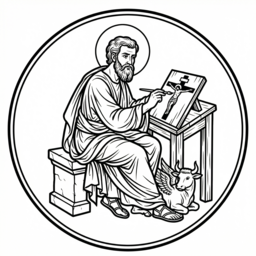
Every spring, Christians around the world observe Holy Week — the eight days from Palm Sunday through Easter. It is the oldest and most sacred season in the Christian calendar, and it tells the story at the heart of the faith: the final days of Jesus Christ, from his triumphal entry into Jerusalem to his crucifixion and resurrection.
If you’ve never experienced Holy Week in a traditional church, here’s what it looks like — and why, after two thousand years, it still draws people in.
Palm Sunday — The Crowd’s Welcome
Holy Week begins with a procession. On Palm Sunday, Christians carry palm branches and walk together into the church, reenacting the day Jesus rode into Jerusalem while crowds waved palms and shouted “Hosanna!”
This is worship you experience with your whole body — not just your ears. Children especially come alive on Palm Sunday: they hold real branches, walk in a real procession, and join their voices to a shout that’s echoed across twenty centuries. The liturgy doesn’t ask children to sit still and be quiet. It gives them something to hold, something to do, and a story they can feel.
But the mood shifts as the service continues. The full Passion narrative — the account of Jesus’ betrayal, trial, and death — is read aloud by the congregation. You hold palm branches in one hand and hear the story of the cross in the other. The contrast is the point: the same crowd that welcomed him on Sunday called for his death by Friday.
Maundy Thursday — The Last Supper
The word “Maundy” comes from the Latin mandatum — commandment. On the night before he died, Jesus shared a final meal with his disciples, washed their feet, and gave them a new commandment: “Love one another as I have loved you.”
In traditional churches, Maundy Thursday services reenact these events. There is a celebration of Holy Communion recalling that first Eucharist. In many parishes, the priest washes the feet of members of the congregation — a physical act of humility and service.
The service ends in silence. The altar is stripped bare — linens removed, candles extinguished, ornaments carried away. The church is left empty and dark, as if the life has gone out of it. Because, in the story, it has.
Good Friday — The Cross
Good Friday is the day Christians remember the crucifixion of Jesus. The name isn’t ironic — “good” here comes from an older sense meaning “holy.”
There is no celebration on Good Friday. The service is solemn, spare, and focused entirely on the cross. Scripture is read. Prayers are offered for the whole world. The cross is venerated — sometimes carried through the church, sometimes simply placed where the congregation can approach it in silence.
Many people — including people who aren’t sure what they believe — find Good Friday to be the most powerful service of the year. There is no attempt to soften the story or rush past the suffering. The church sits with death. It doesn’t explain it away. It simply witnesses.
Holy Saturday — The Waiting
Holy Saturday is the day between death and resurrection. In the ancient tradition, Jesus descended into hell — not to suffer, but to liberate the dead. The church waits. The altar remains bare.
This is the quietest day of the Christian year. If you have ever sat with grief and not known what comes next, you know what Holy Saturday feels like.
Easter Sunday — He Is Risen
And then — light.
Easter is the celebration of the Resurrection: the proclamation that Jesus Christ, who was dead, is alive. The church that was stripped bare on Thursday is dressed in white and gold. Flowers appear. The word Alleluia, silenced throughout Lent, returns. The congregation greets each other: “Christ is risen!” — “He is risen indeed!”
Easter is not simply a memorial. Christians believe the Resurrection is an event that breaks open history — that death is not the final word, that love is stronger than the grave, and that the life Jesus offers is available now, to anyone who will receive it.
Why Experience It in Person?
You can read about Holy Week. But there is something about being there — walking with the palms, hearing the Passion read aloud, sitting in the dark of a stripped church on Thursday night, kneeling before the cross on Friday, and then hearing the Easter proclamation on Sunday morning — that no summary can capture.
Holy Week is not a lecture series. It is a journey. And it is open to anyone willing to take it.
Join Us
At St. Luke’s Anglican Church in Colorado Springs, we observe the full Holy Week liturgy:
- Palm Sunday, March 29 — 10:00 AM
- Maundy Thursday, April 2 — 6:00 PM
- Good Friday, April 3 — 12:00 PM (Noon)
- Easter Sunday, April 5 — 10:00 AM
All are welcome. No preparation needed — just come.