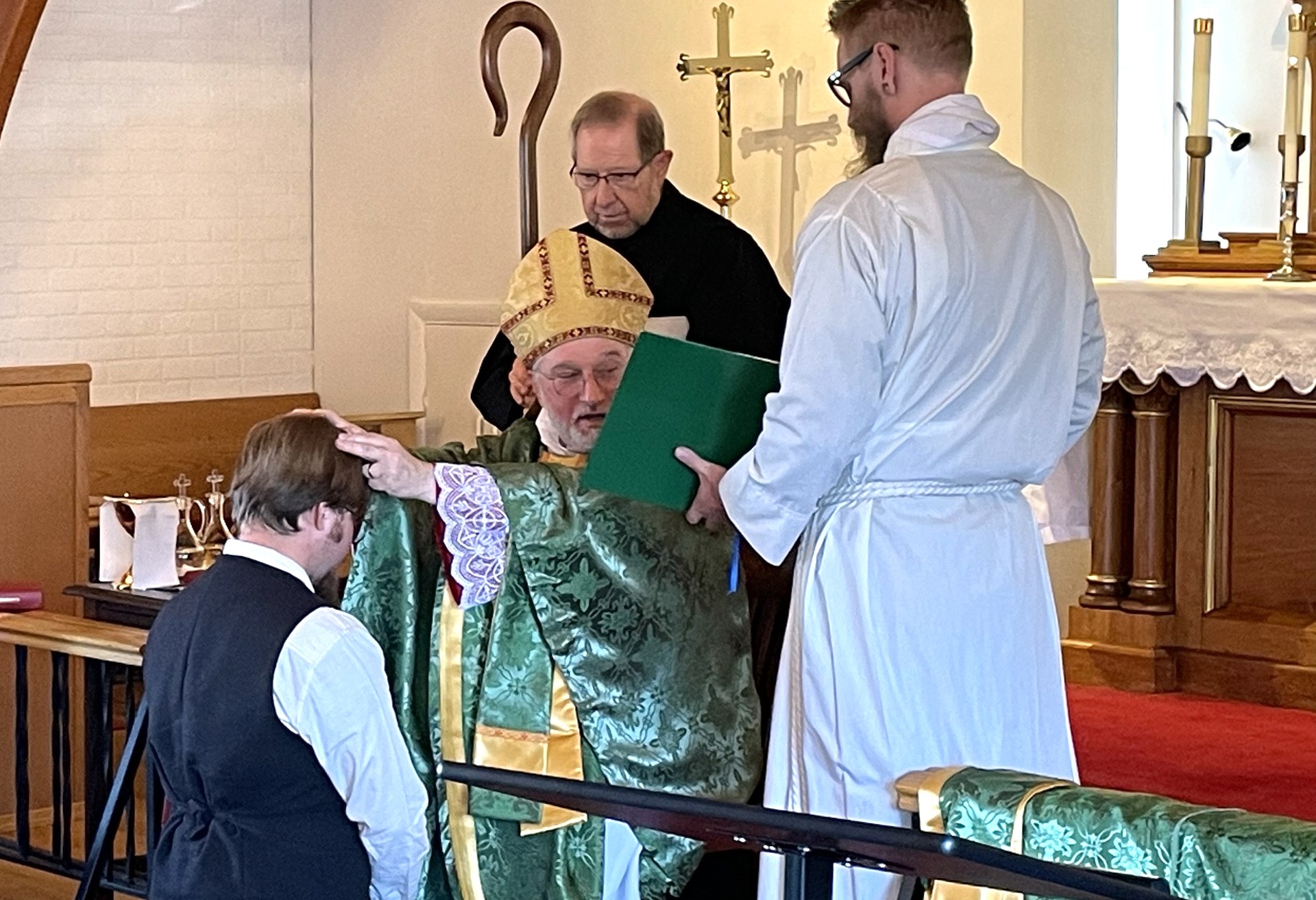
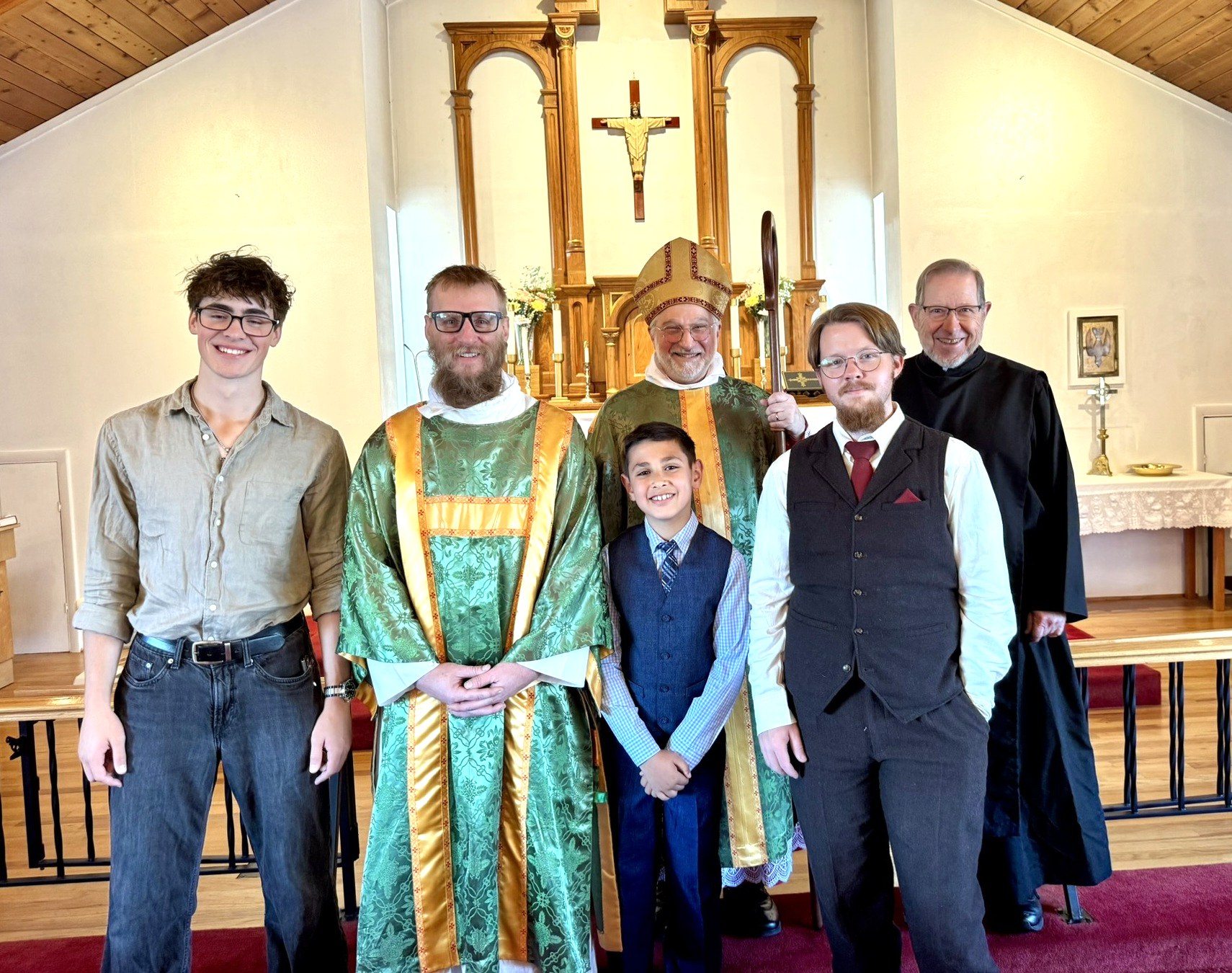
When the apostles at Jerusalem heard that Samaria had received the word of God, they did not send a letter. They sent Peter and John, who came down, prayed, and “laid their hands on them, and they received the Holy Ghost” (Acts 8:17). The Church has never found a better way, because there isn’t one. So this past Sunday, when three of our own were ready, the Church did what she has always done: she sent a successor of the apostles. Bishop Patrick Fodor came to St. Luke’s, and two adults and one of our young people knelt before him to be confirmed.
A Personal Pentecost
Confirmation is the sacrament by which the new life given in Baptism is confirmed — strengthened — by the power of the Holy Ghost. Scripture calls him the Comforter, a word that in the old tongue means the Strengthener. What Pentecost was to the whole Church, Confirmation is to the single Christian: the same Spirit who fell upon the apostles and made them bold comes now to this soul, to teach him, to sanctify him, and to make him strong.
The bishop’s prayer over the candidates asks for that strength by name — the sevenfold gifts of the Spirit: wisdom, understanding, counsel, ghostly strength, knowledge, true godliness, and holy fear. It is worth pausing on that list. It is not a list of feelings. It is field equipment — the outfitting of a soldier who is expected to see service.
Vows, Hands, and Oil
The rite itself is brief, and every inch of it is old. First the vows: each candidate stood and renewed, with his own mouth, the solemn promises of his Baptism — to renounce the devil, to believe the faith, to obey God’s will. For a young person especially this is the hinge of the whole thing: promises once made for him are now made by him, aloud, before God and the parish.
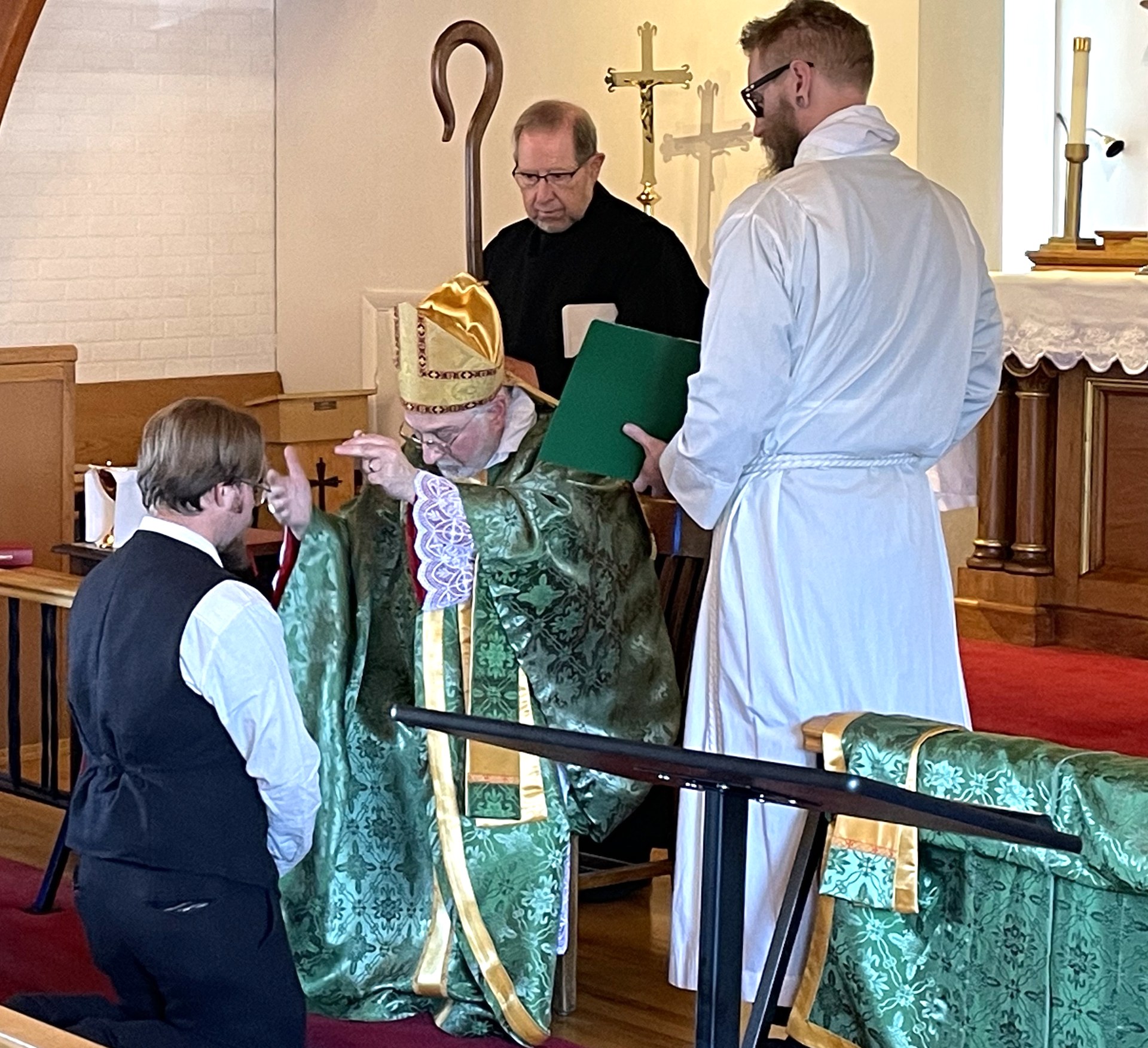
Then the hands. Each knelt in turn, and the bishop laid his hands upon each head with the prayer generations of Anglicans have carried with them out of that moment: “Defend, O Lord, this thy child with thy heavenly grace; that he may continue thine for ever; and daily increase in thy Holy Spirit more and more, until he come unto thy everlasting kingdom.” And with it the anointing — the sign of the Cross traced on the forehead in holy chrism, oil blessed by the bishop, sealing what the hands had asked. Kings and priests were anointed in Israel; the newly confirmed Christian is anointed into the royal priesthood of the baptized.
Two Sons, One Father
The Gospel appointed for the day — by no scheming of ours — was the parable of the Prodigal Son, and Bishop Fodor preached it. There are two rebellions in that story, he reminded us, not one. The younger son rebels by leaving: the far country, the wasted inheritance, the pigs. The elder son rebels without ever leaving the yard — the rebellion of the legalist, who has kept every rule and turned his father’s house into a workhouse: “Lo, these many years do I serve thee.” He serves, but as a wage-earner; he has forgotten he is a son.
And between them stands the bargain the younger son rehearses in the pig-mire: “Make me as one of thy hired servants.” He never gets to say it. The father, running, falls on his neck and calls for the robe and the ring before the proposal can leave his mouth. God does not bargain, the bishop told us, and he will not be bargained with. He is not hiring. He is welcoming home — and the only thing asked of us is to stop negotiating and trust the grace that overflows.
It was the right sermon for a confirmation. The seven gifts are exactly that — gifts. No one on their knees at the chancel step had earned what the hands and the oil conferred.
A Servant for the Altar
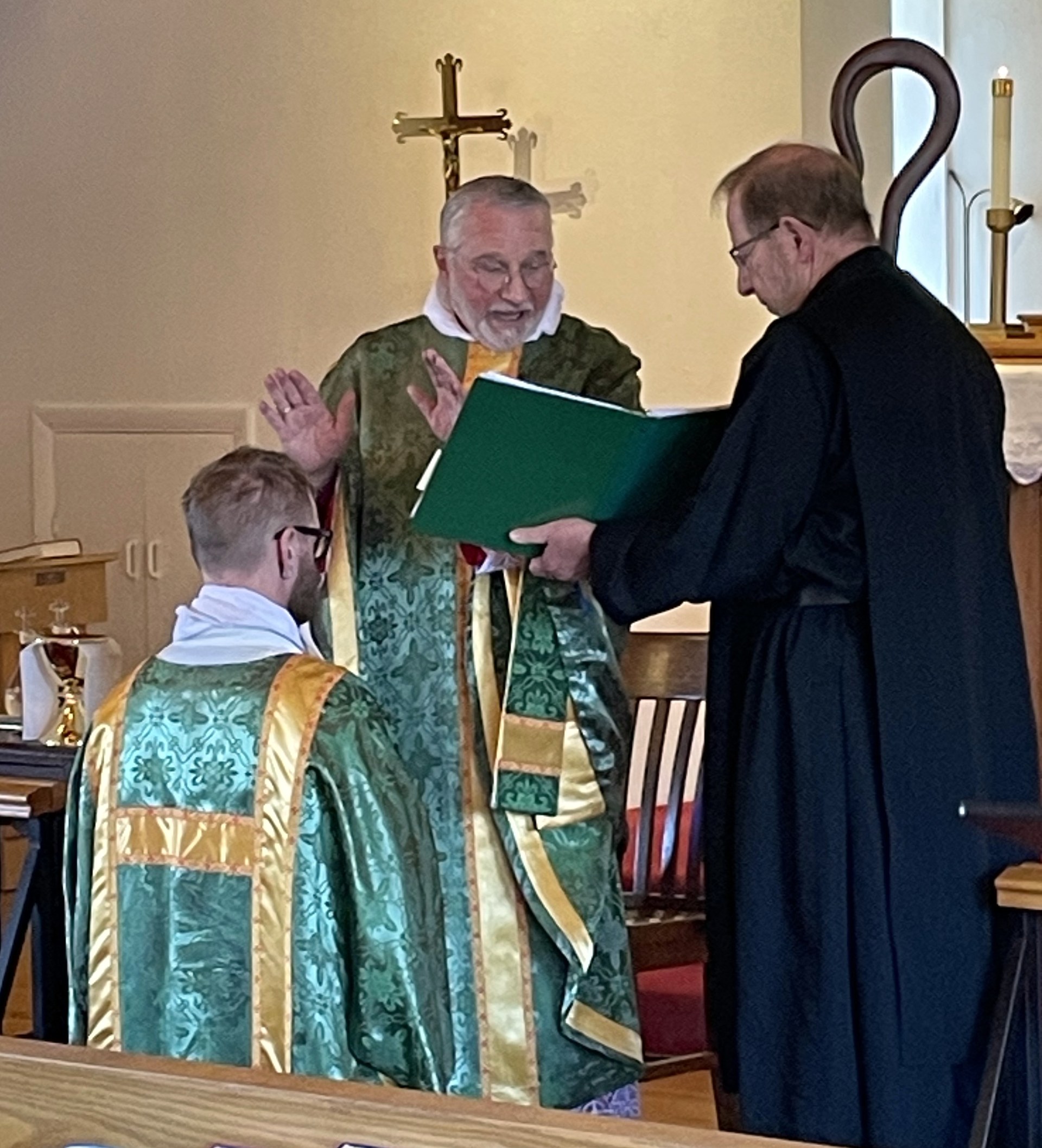
There was one more grace to the day: Ryan Steffenhagen was admitted to the office of subdeacon, vested in the tunicle by Fr. Nicholas as the bishop read the charge.
The subdeacon is one of the Church’s most ancient ministries — attested from at least the third century — and his work is the humble machinery of solemn worship. He chants the Epistle at High Mass. He prepares the vessels for the altar and cares for them after. He stands at the deacon’s side through the liturgy, vested in the tunicle, doing a hundred small exact things so that the worship of God goes up without a snag. It is a ministry of service in the most literal sense: hands busy at the edges of the holy so that everyone else may attend to the center.
And here the bishop’s sermon quietly completed itself. The elder brother served in his father’s house and soured, because he served for wages. A subdeacon — or any Christian servant — is admitted to serve for a different reason entirely: not to earn a place in the house, but because the house is already his home. Service that begins from grace is joy; service that hopes to purchase grace is drudgery. The difference between the two is the whole Gospel.
Pray for our newly confirmed — that the Spirit’s sevenfold gifts would grow in them daily, as the prayer asks. Pray for Ryan, our new subdeacon, that his service at the altar be long and glad. And pray for the rest of us, elder brothers all at one time or another, that we would put down our accounts and come in to the feast.
Curious what any of this looks like up close? You are welcome to come and see, any Sunday at 10:00 AM. Plan your visit →